
Writing Through Winter: How to Stay Creative When It Gets Dark Early
How to keep writing when the days are short: micro-sessions, morning light, seasonal prompts and a bit of...

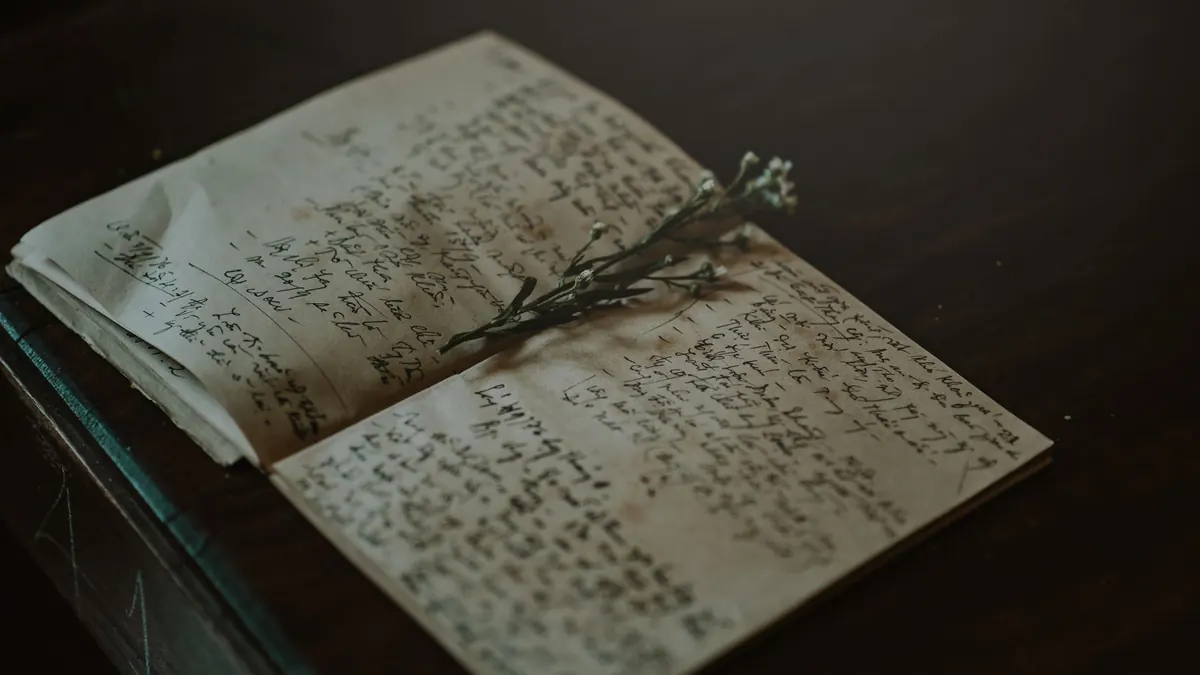
Most diaries are not literature. They are weather reports, arguments, shopping lists and sentences abandoned at midnight. That is precisely what makes them useful. Somewhere in those unedited pages is the raw material for an essay — a piece of writing that takes one private Tuesday and makes it mean something to a reader who has never met you. The hard part is not the writing. It is the reading back: learning to see your own life the way an editor sees a manuscript.
A diary records what happened. An essay is about what it was about. Those are different jobs, and the gap between them is where most personal writing fails.
When you read back, resist the urge to ask, "What happened next?" Ask instead: what keeps returning? What am I not saying? Which entries still carry heat?
Heat is a useful word. Some entries look flat on the page, yet you remember the room, the light, the tone of someone's voice. That residue is a signal. It usually means the moment is unresolved, and unresolved moments make better essays than settled ones.
Keep a running list of five or six candidate themes as you read. Not topics — themes. "My mother" is a topic. "The things we inherit that we never chose" is a theme. The first gives you a subject. The second gives you something to argue with.
The pattern pass is the one people skip. Do not skip it. It is the step that turns a mood into a structure.
Writers often try to sound universal by generalising, and it backfires. "We all feel lost sometimes" means nothing. A description of standing in a supermarket car park at six in the evening, unable to remember which door is yours, means something.
Specificity is the doorway; the general idea is the room behind it. You take the reader through the door with the detail, then let them find themselves in the room. So a piece about leaving a job might open with the mug you left in the office cupboard, and only later arrive at the larger question of what we owe the places that shaped us.
Test every draft with a single question: so what? Not aggressively — once per section is enough. If the answer is "because it happened to me", the essay is not finished. A quiet essay still needs a point of view, a question it is genuinely asking, or a claim it is willing to stand behind.
Diaries move forward in time because days do. Essays rarely should. Chronology is the default, and the default is usually the flattest option available.
Choose the shape that lets the theme do the work rather than the date stamp. You can lose the timeline in a second draft, and readers rarely miss it.
Self-indulgence is not the same as honesty. Honesty is telling the truth about something difficult. Self-indulgence is asking a reader to be moved without giving them a reason.
Watch for these signs:
Here is a fix that works more often than it should. Take any emotional paragraph and delete its first sentence. If the scene still does the work, that sentence was scaffolding. If the paragraph collapses, the scene was never carrying the feeling in the first place.
Give the other people in your entries some interiority. One sentence acknowledging that your mother had her own reasons, or that your flatmate was frightened too, shifts the register from complaint to understanding. And decide early who the piece is for: not the version of you who lived it, but the stranger reading it on a train.
A note on privacy: diaries contain other people's lives as well as your own. Changing names and identifying details is ordinary practice. If publication could genuinely harm someone, or you are unsure where the boundaries lie, it is worth taking advice before you send it out.
Here is a workable order of operations:
Keep the diary. It is your quarry, not your draft. The essay is a different object, built for someone else — and the moment you start building it for them, the private becomes shareable.
Photo: Min An / Pexels
How to keep writing when the days are short: micro-sessions, morning light, seasonal prompts and a bit of...
Editing your own first draft is easier in stages: shape the structure, sharpen each scene, tighten...
A practical guide to telling the difference between personal essays and memoir, covering scope, voice,...